Designers
Biography
Interpreting the ideas behind mathematical artwork as wearable clothing is a way to extend the reach of art beyond gallery walls.
Looks
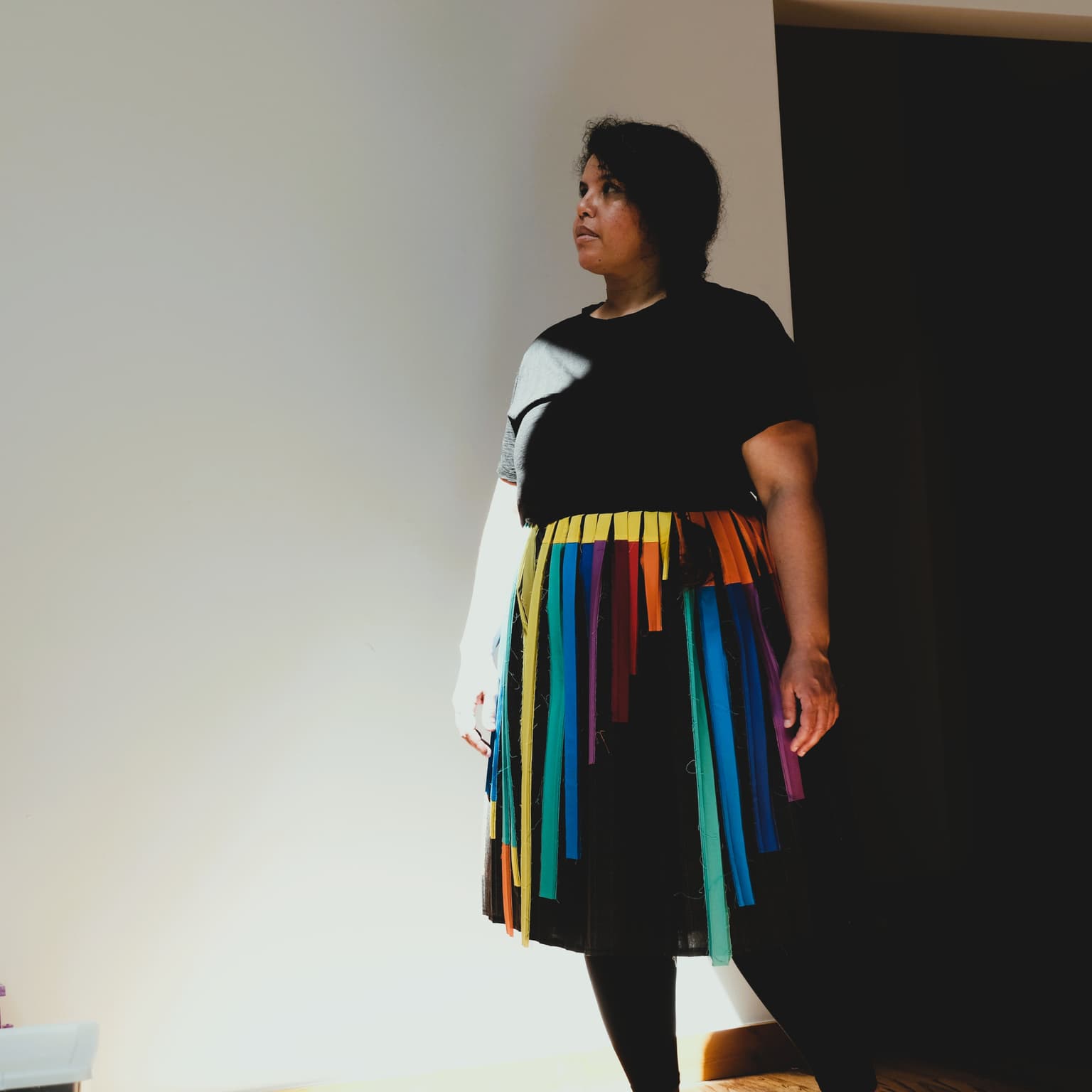
skirt on model, front
model: Naomi Rowe / photo: Adam Rowe
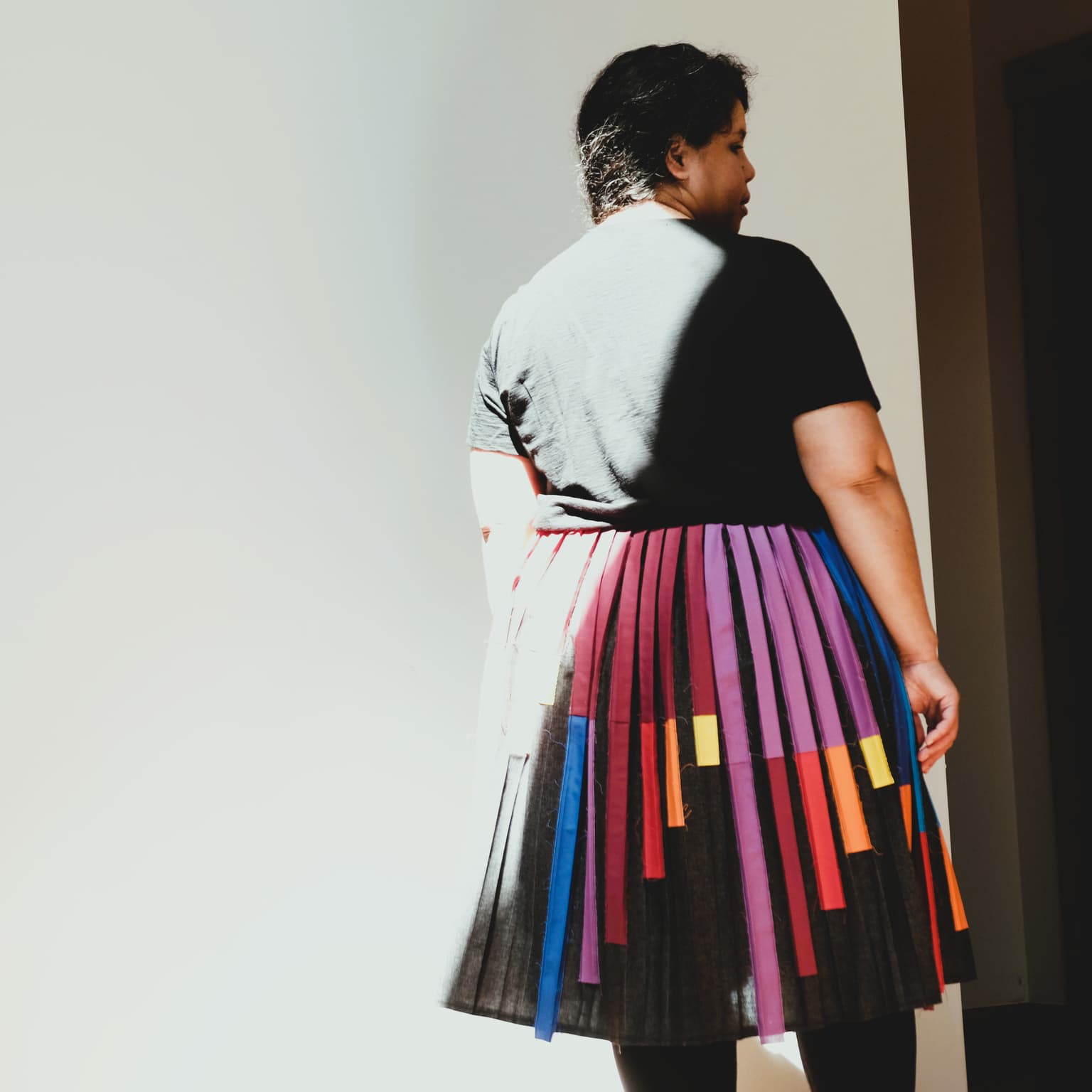
skirt on model, back
model: Naomi Rowe / photo: Adam Rowe
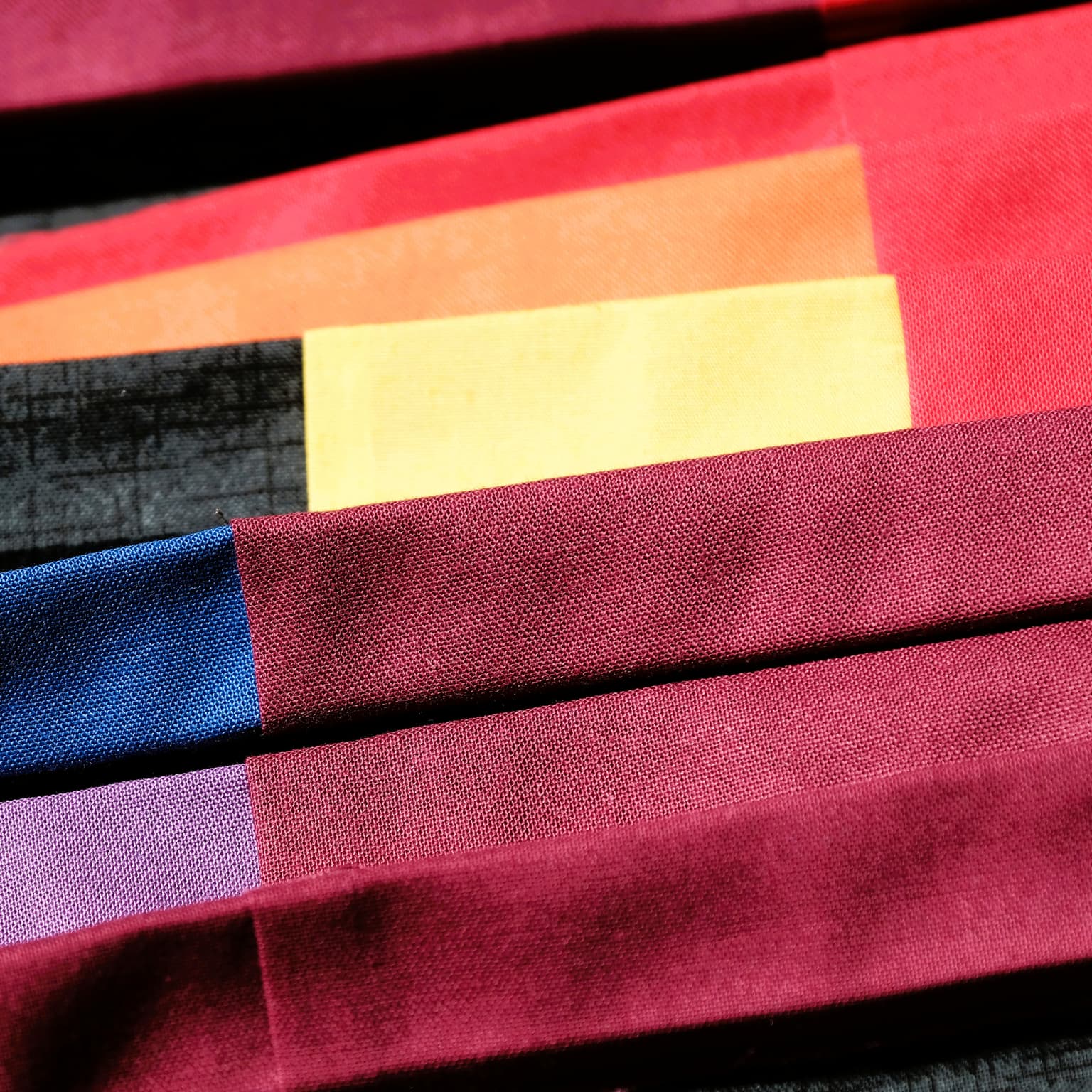
pleat detail
photo: Adam Rowe
About the look
rana viam skirt
cotton fabric
2026
This piece is part of an ongoing collection visualizing the choices a frog has when hopping on lily pads across a pond. Wearing this clothing item, both amphibians and humans can use it to plan or avoid a particular series of hops and look good while doing so.
The color areas of different sizes represent the size of each hop - 1 lily pad, 2 lily pads, all the way up to a leap all the way across the pond. Starting with the waist and moving toward the hemline, all possible choices are represented.
More information about other related works can be found here: https://adamrowe.com/rana-viam-artwork/
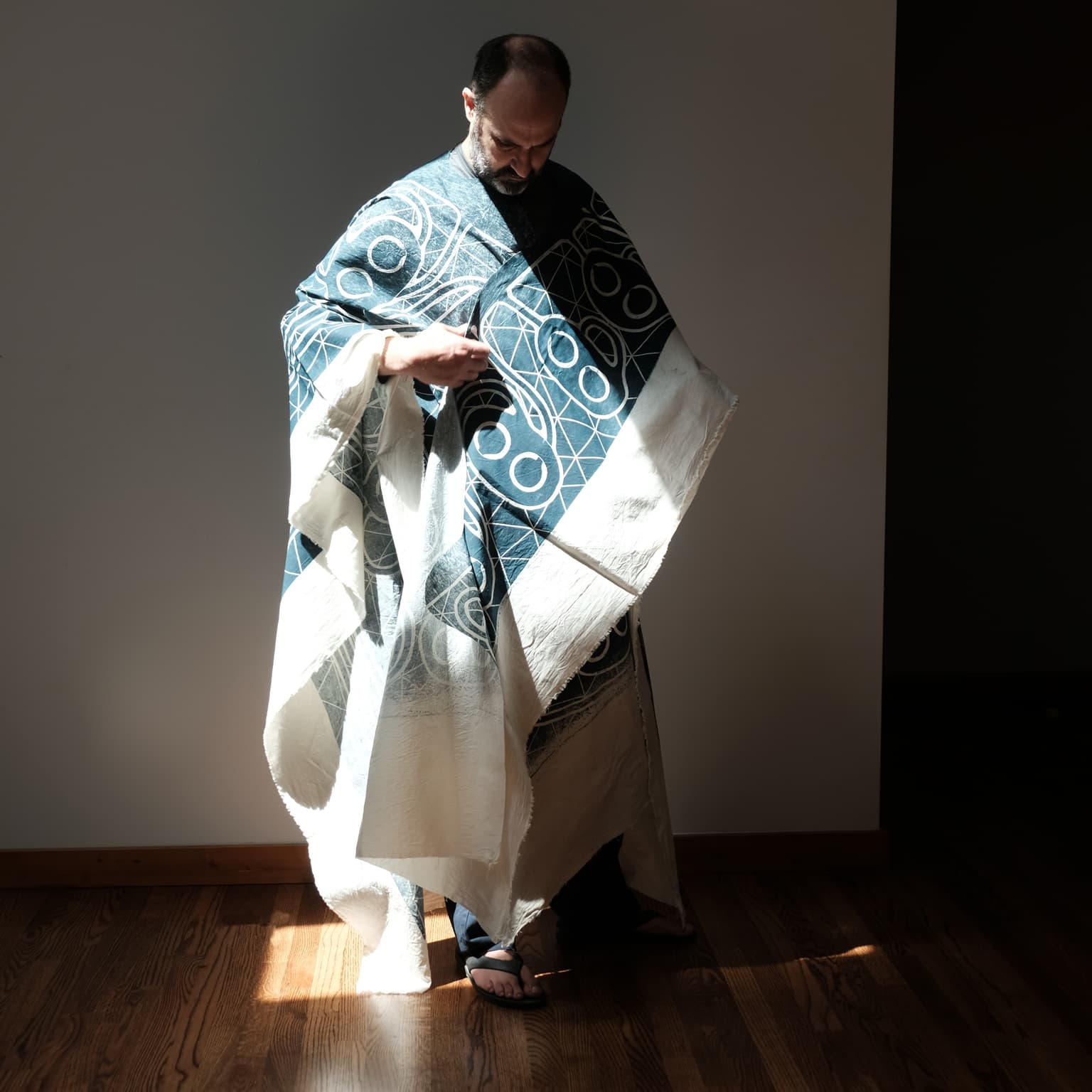
front view, as worn
model: Adam Rowe / photo: Naomi Rowe
back view with graphics visible
model: Adam Rowe / photo: Naomi Rowe
front view with graphics visible
model: Adam Rowe / photo: Naomi Rowe

fabric detail
photo: Adam Rowe
About the look
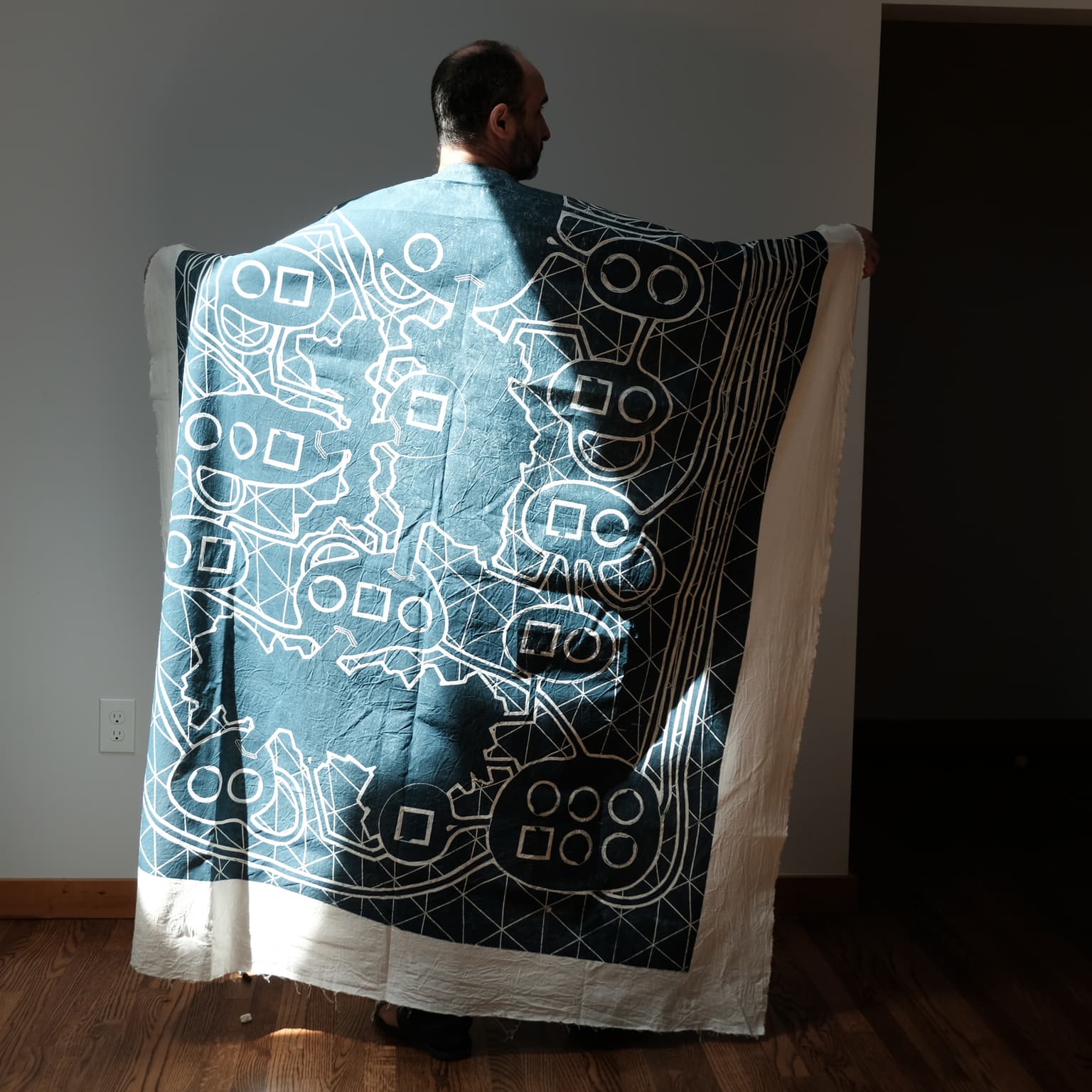
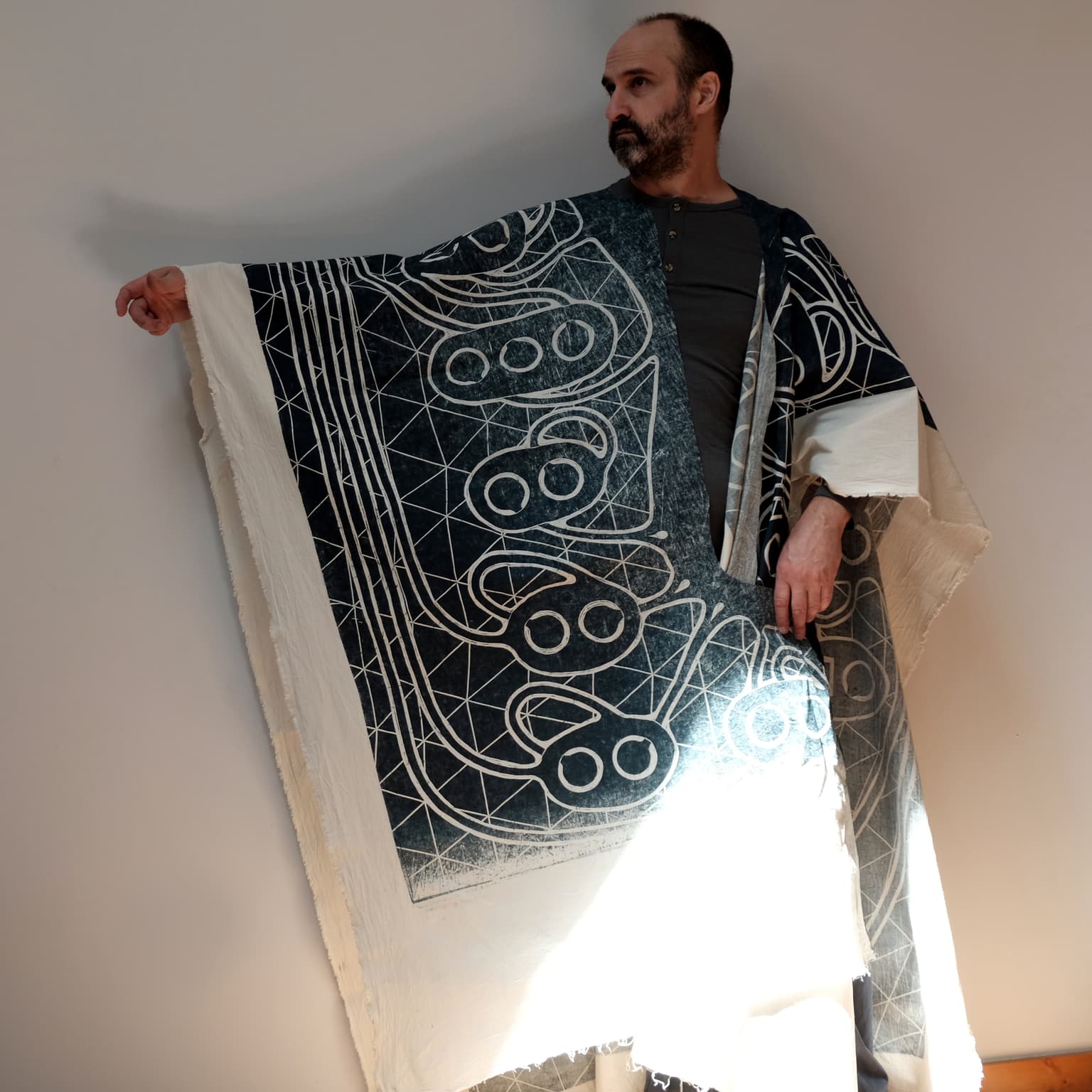
ey bee sees cloak
cotton muslin, woodblock printed
2026
The graphic image on this garment is an Euler diagram appearing as a graph, showing the relationships between the letters of the alphabet and their phonetic respellings.
Each letter has at least one definition in the dictionary, one that identifies the ordinal space occupied in the alphabet. As with all dictionary entries, each letter is supplied with a phonetic pronunciation. This can come in the form of the International Phonetic Alphabet and might also show up as a phonetic respelling. The latter has the advantage of simplicity, since it only uses (Roman) letters that are in actual words (æz əˈpoʊzd tʊ ˈmoʊstli ˌɛsəˈtɛrɪk ˈsɪmbəlz).
On the other hand, spelling out the sounds that individual letters make requires the use of other letters, presenting some interesting problems: Take A for example. A is spelled (with its phonetic respelling) EY. E is spelled with two more Es and Y is spelled WAHY. In fact, seventeen letters contain themselves in their phonetic respellings. (I considered these respellings as axiomatic, since they did come from the dictionary after all.) Things become complex quickly when one letter of the alphabet needs dozens of other letters and recursions to fully describe it. Fortunately, a graph handles this nicely, if you don’t mind dealing with a K5 and a K3,3 embedding.
The blobs containing circles and squares represent individual letters. The shapes within the blobs indicate which letters appear in each phonetic respelling. Thin lines connect letters to the spellings in which they appear. Recursions are represented by connectors that go from a blob boundary back into the same blob. There is a small number of shared vowel diphthongs represented by jagged shapes, greatly reducing the number of connectors.
Displaying the diagram on wearable item provides ample space to see all the connections.
The printing method for the fabric utilized a single 4' x 8' handcut woodblock and a steamroller.