2026 Bridges Conference Math + Fashion
3D Robot Knit Lab
Designers
Leslie Eisinger
Fashion researcher
Amsterdam University of Applied Science
Amsterdam, the Netherlands
Troy Nachtigall
Designer, Designer Researcher
Amsterdam University of Applied Sciences, TU/e
Amsterdam / Eindhoven
Biography
The 3D Knit Robot Lab at the Amsterdam University of Applied Sciences (HvA–AMFI) is a living lab run by Leslie Eisinger and Troy Nachtigall exploring how digital knitting technologies can transform textile production from industrial mass manufacturing to localized, data-driven systems. At its core is a Shima Seiki WholeGarment knitting machine that enables the direct production of fully formed garments in three dimensions, eliminating cutting and sewing and significantly reducing material waste. The lab serves as both a research environment and an educational platform, bringing together students, researchers, designers, and industry partners to experiment with advanced knitting techniques and new production models. It operates within the broader research agenda of digital fabrication and circular textile systems, investigating how garments can be produced on demand, personalized with data, and manufactured closer to the point of use. A central focus of the lab is integrating design, programming, and material development into a single workflow. Rather than treating garments as static products, the lab approaches knitwear as a programmable system, with structure, fit, and function encoded directly into machine instructions. This enables new forms of customization, including garments generated from body data and adapted to individual users. The lab also serves as a testbed for sustainable and circular practices. Projects such as “Keeping it Local” explore how localized production and identity-driven design can reduce environmental impact while strengthening regional textile ecosystems. Educational programs, including intensive summer and winter schools, train participants in the technical and conceptual aspects of digital knitting, fostering interdisciplinary collaboration between creative and technical domains. https://www.amsterdamuas.com/research/labs/3d-knit-robot-lab
Looks
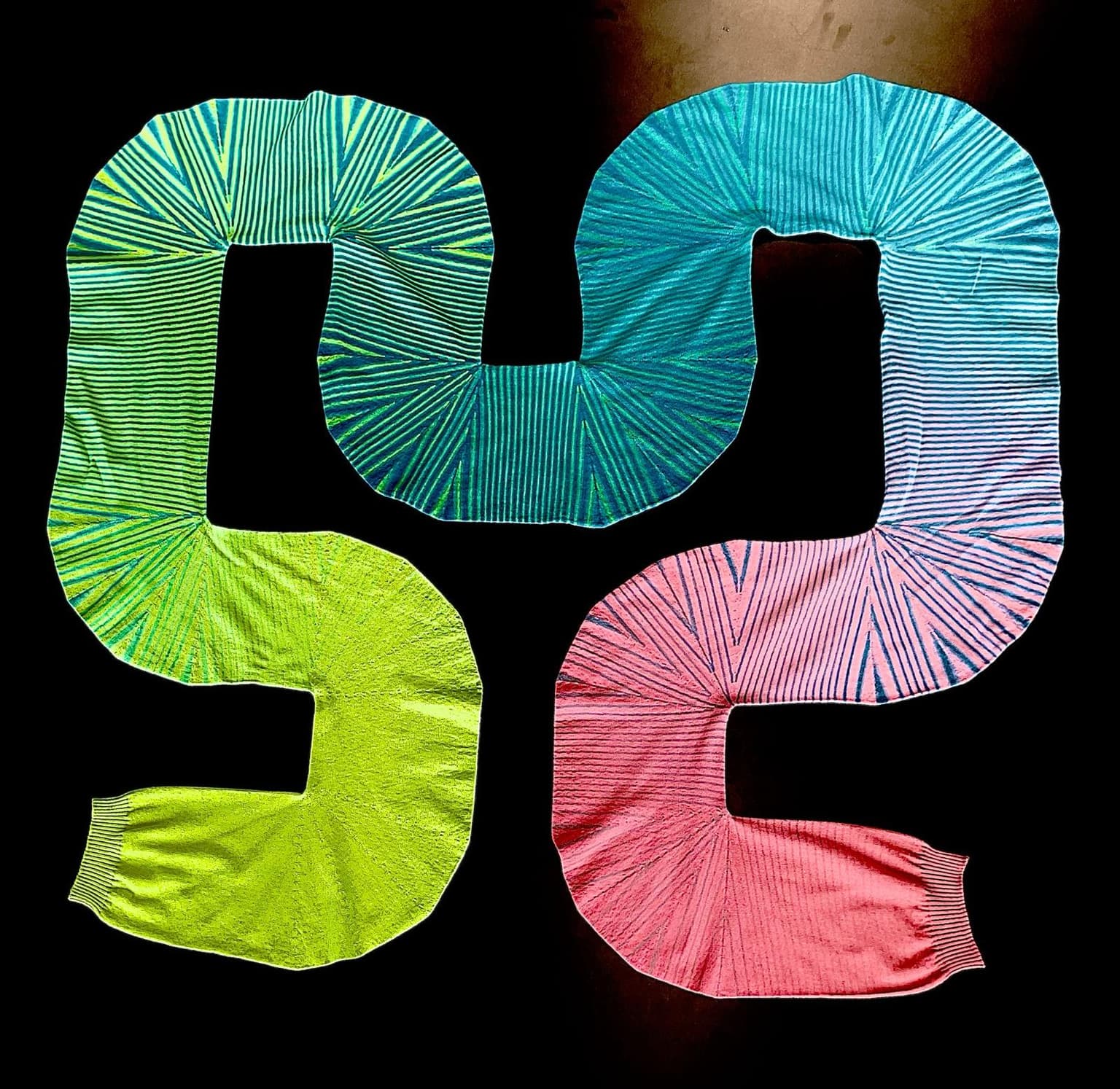
Hilbert Curve Scarf Flat
Photo Troy Nachtigall
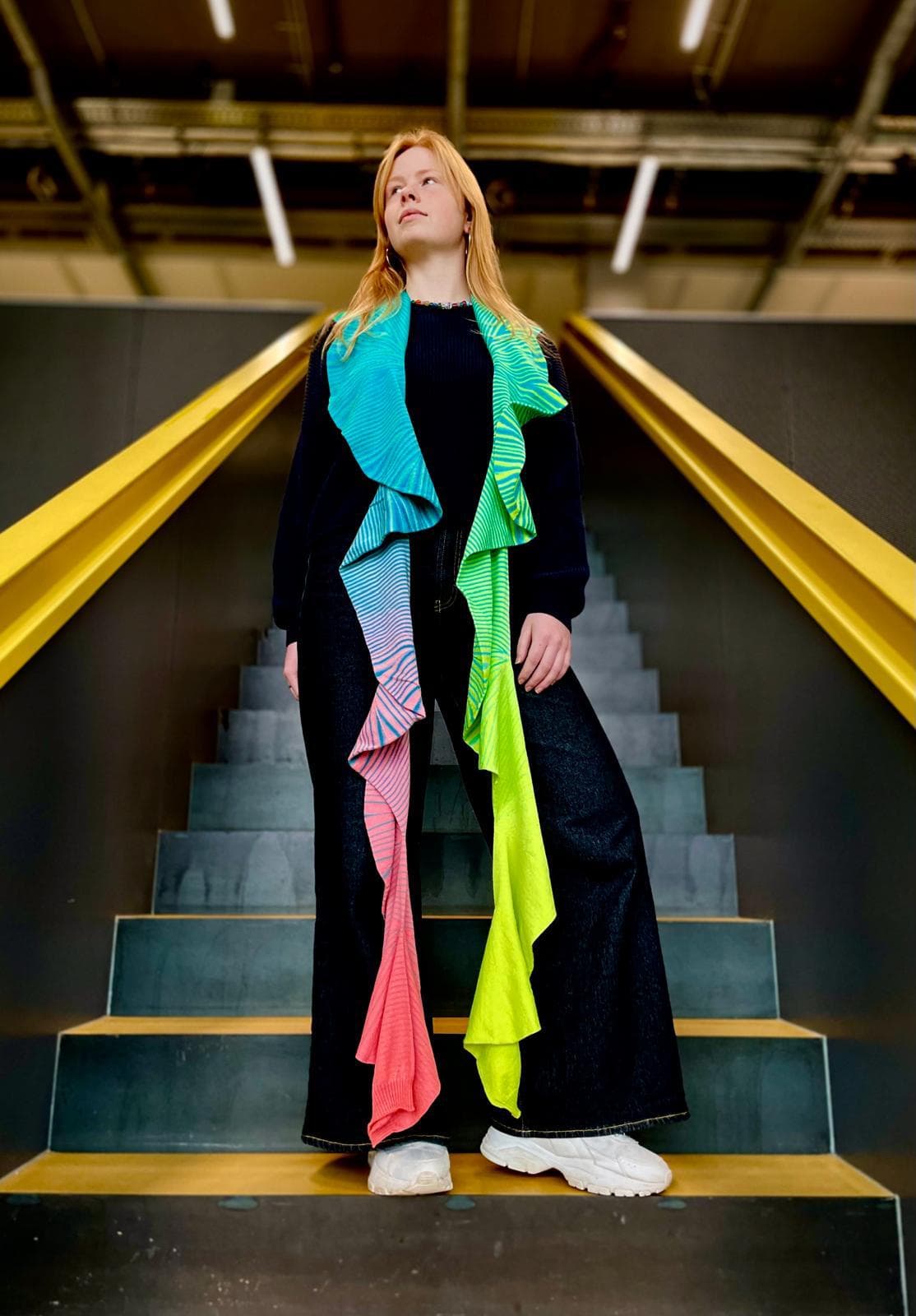
Hilbert Curve Scarf when worn
Model Femke van Woerden
About the look
Space Dying Hilbert Curve Scarf
Robotic Knitting in 100% hand Died Wool
2026