2027 Joint Mathematics Meetings
Cruz Godar
Artists
Cruz Godar
Lecturer
Mathematics Department, Yale University
New Haven, Connecticut, USA
Statement
My first two college courses were in math and computer science, and since then, I’ve been fascinated by where the two subjects meet. I’ve written dozens of applets for creating and exploring fractals and other mathematical objects — in a web browser, a VR headset, or the physical world via 3D printing. The generative art these applets produce helps counter the stereotypical presentation of math as a completely obscure subject, and my hope is for them to be useful to mathematicians and appreciable by anyone, mathematician or not.
Artworks
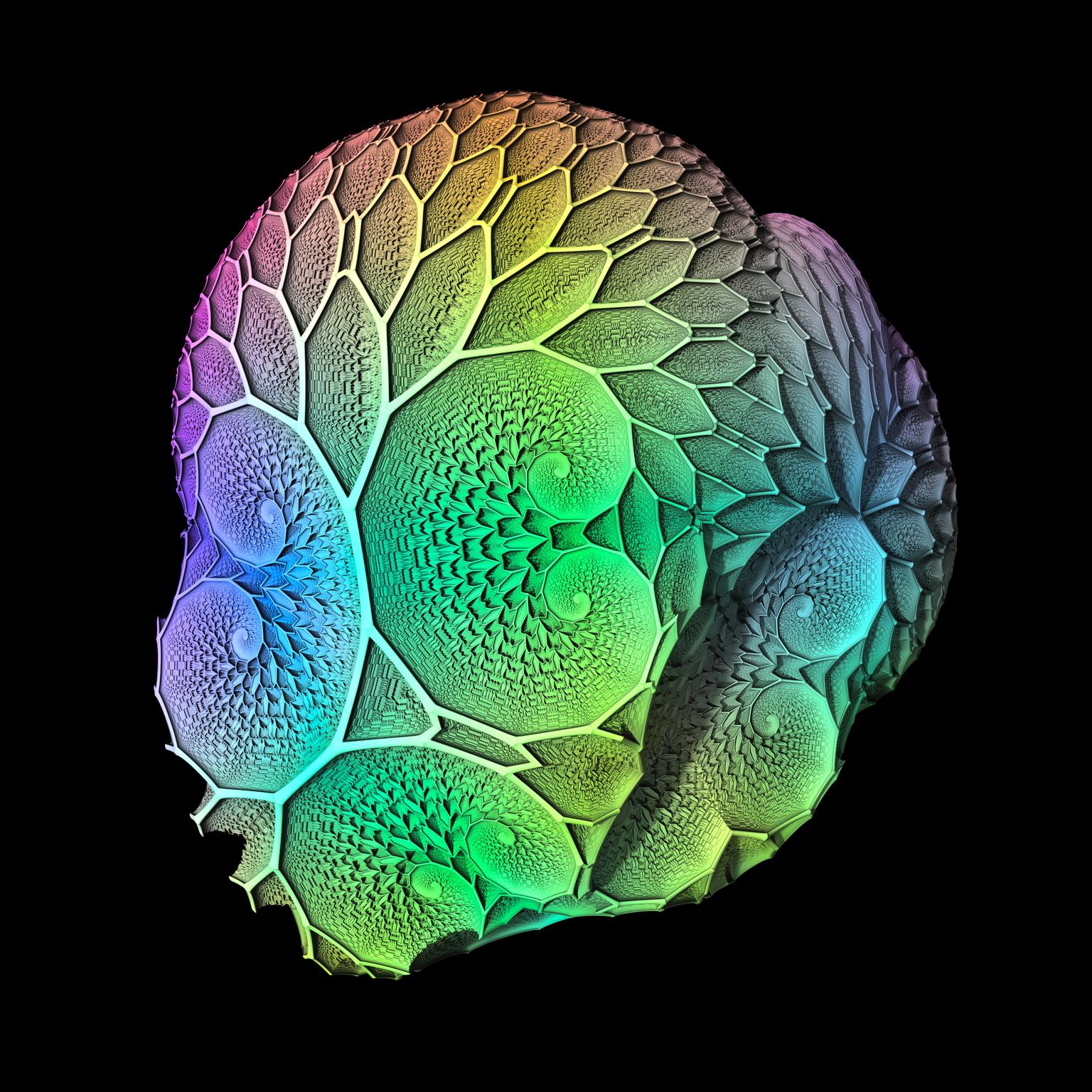
In 2010, as modern GPUs were becoming widespread, a rendering method for a new type of 3D fractal was introduced that would quickly become famous. Called Kaleidoscopic IFS (iterated function system) fractals, they generalize the Sierpinski tetrahedron to the rest of the Platonic Solids and add rotation and scaling to create fascinating objects. This fractal is created from a tetrahedron that has been iteratively rotated and collapsed on itself until its intricate details constructively interfere, producing an object that looks incredibly organic and alien at once.
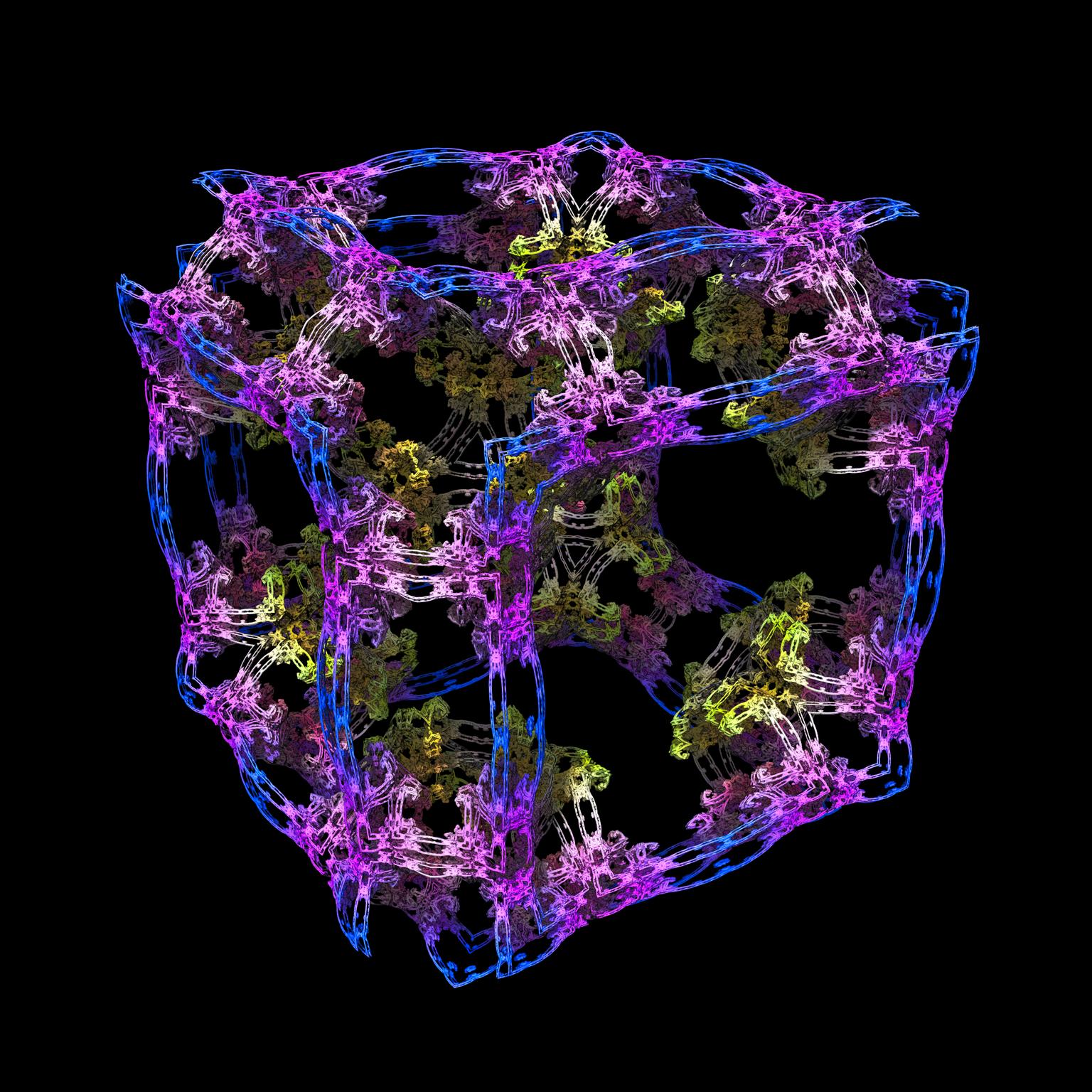
The Menger sponge is one of the most famous 3D fractals, created by successively coring out portions of a large cube in a manner analogous to the Sierpinski carpet. By varying the scale of the cubes we remove and adding rotations to the entire structure at each step, we can produce a fractal that retains the overall cubic structure while developing intricate spindles and details, blurring the line between coral and a metallic superstructure.