2027 Joint Mathematics Meetings
Joāo Cavaleiro
Artists
Statement
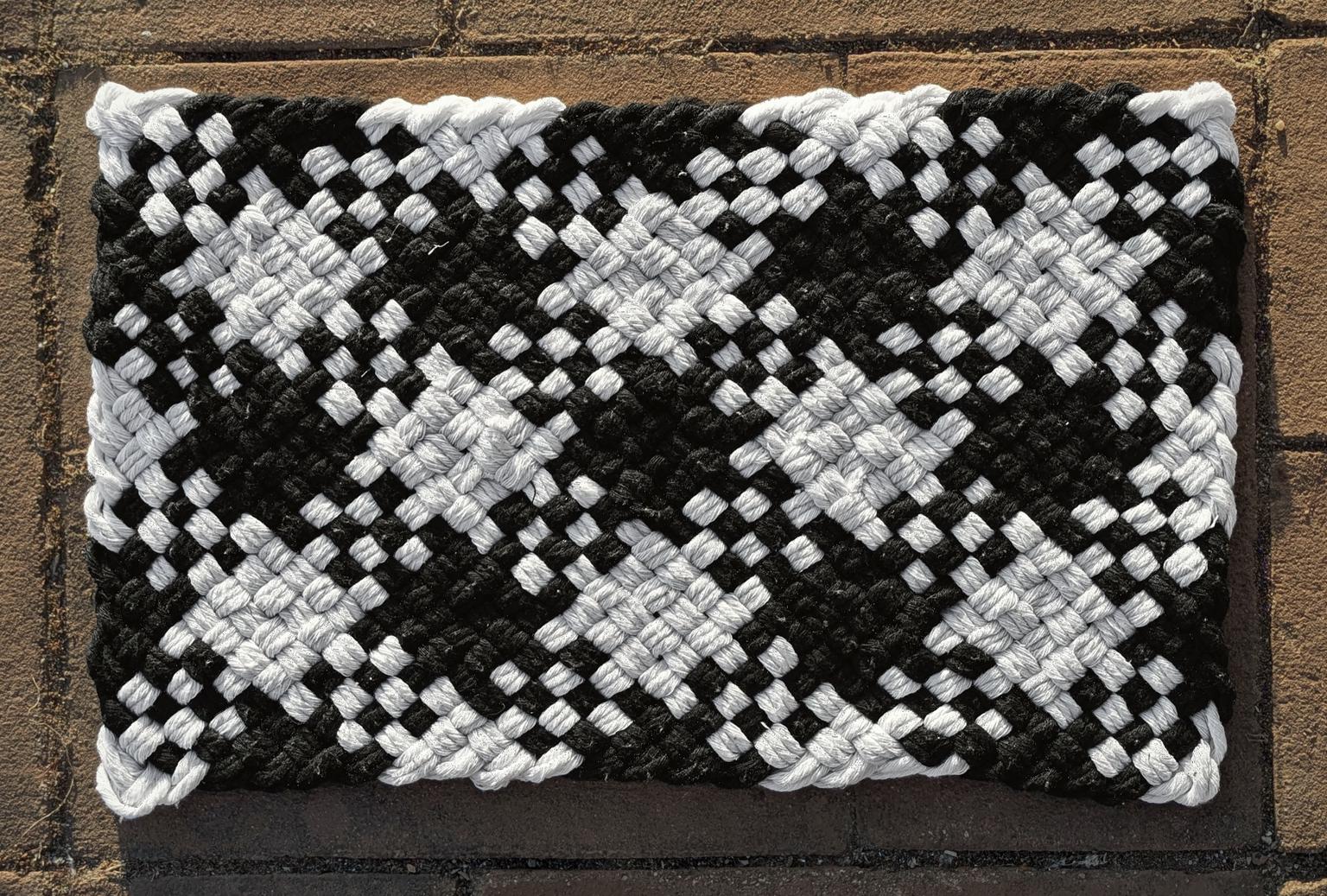
[Translated from Portuguese] It started with knots: complex shapes made from a single cord. Then, by accident, a shape needed more than one cord to fill it. I gave each cord its own colour, and I am still on that journey of discovery. Nobody taught me. Each cord leaves a nail, bounces from edge to edge and comes home, and I join it to itself so you cannot find the join. One cord alone looks like nothing. This mat has eight, four white and four black, and the pattern appears only when the last one closes. The cords follow a mathematical rule, and it is full of surprises: change the board by one nail and everything changes. Maths was my worst subject at school. Now mathematicians tell me I am exploring open questions in their field.
Artworks