Artists
Tung Ken Lam
Artist
Lancaster, United Kingdom
Statement
I’m an author and designer interested in pattern and structure. I use paperfolding as an economical way of experimenting with geometry. I also use computer graphics software and programming languages to explore and create. Process is important: I desire simple and elegant methods for simple and elegant results. I have written five books on origami and am finishing a book about tiling and symmetry groups.
Artworks
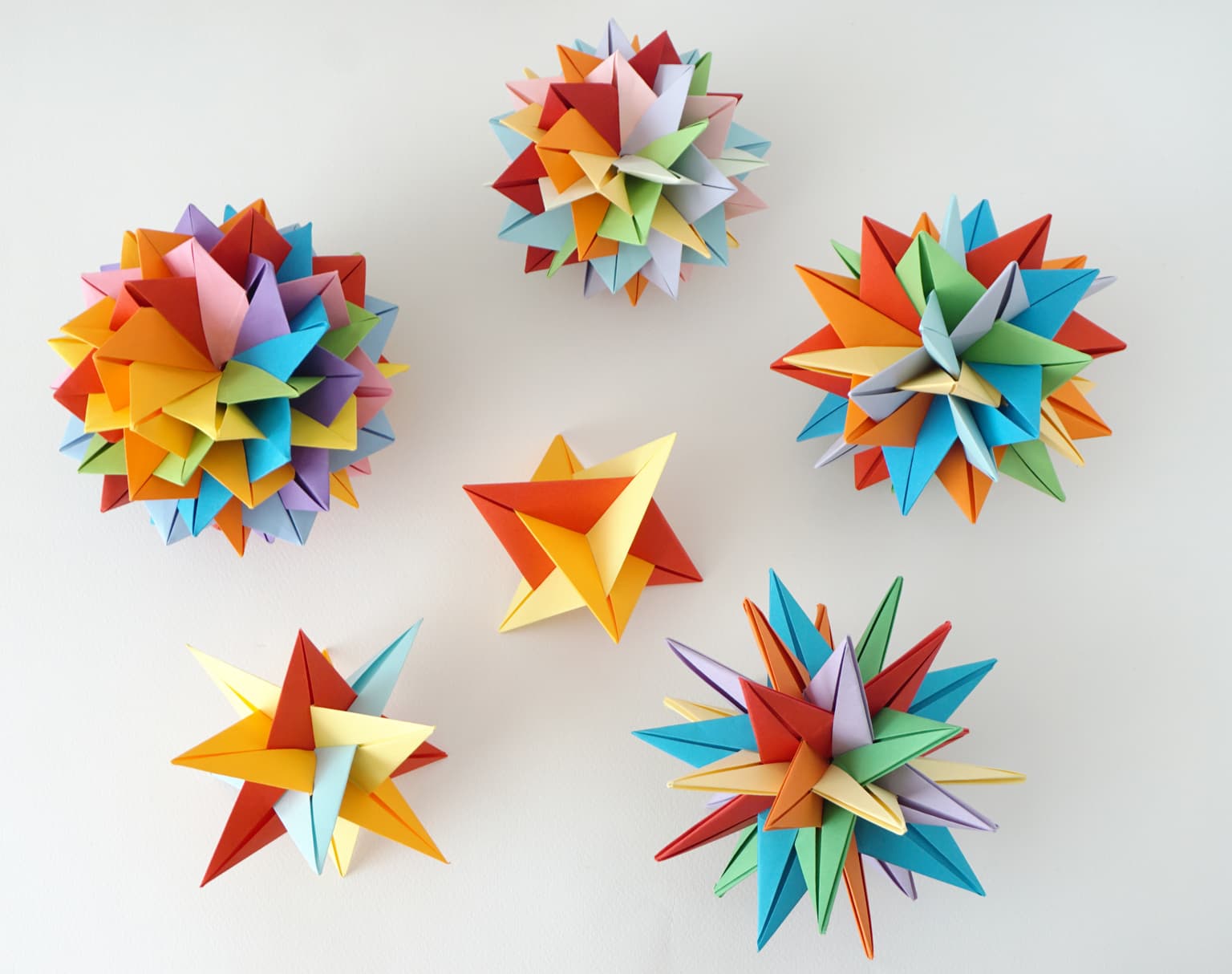
Planar Modular Origami
15.0 x 50.0 x 40.0 cm
Paper
2026
For many years I have been creating shapes that appear to be intersecting polygons. These have n (n–1)-pointed stars (n = 3 or 5 to 9). I used the geometry of 2D and 3D shapes to create the angles and lengths needed by folding (some angles were approximated as paper’s thickness can be significant). Finding simple, efficient and effective use of paper during folding and assembly was important: imposing one’s will on paper can lead to poor results.
Some the shapes have already been made by others (e.g. M. Mukerji) but I have used different units (and some different planar shapes). Also, the shapes are more securely assembled, balancing ease of assembly against security.
Instructions for some shapes are given in the associated workshop.
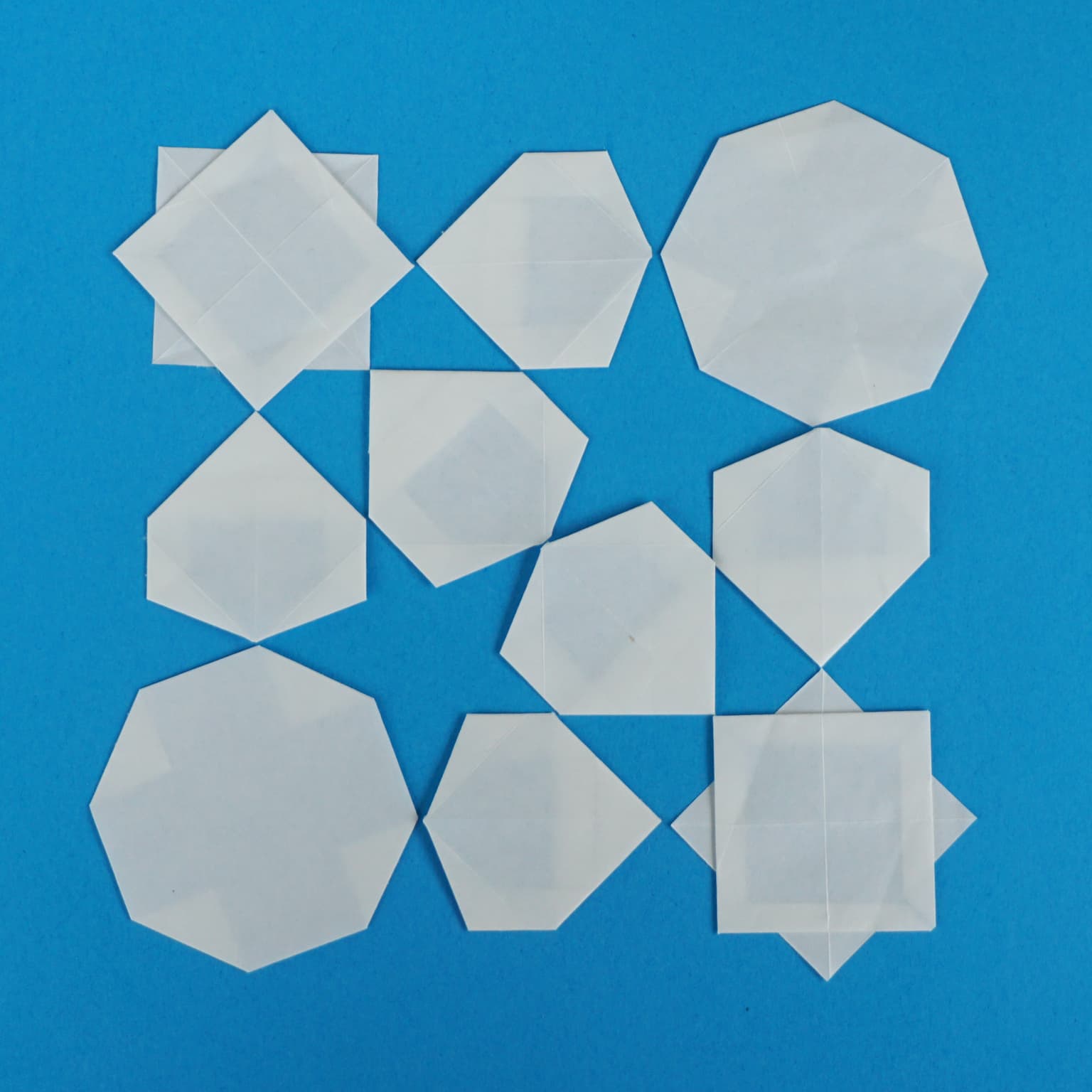
This origami collage is inspired by plate 48 from Bourgoin’s “Arabic Geometric Patterns” which has five kinds of zellij (tiles). The geometry arise naturally from folding squares, in particular from halving and quartering right angles.
The tiling is two-colourable so two of the zellij (kite and five-pointed star) can emerge (without distracting creases or folded edges) from the negative space between the three kinds of folded zellij (octagram, regular octagon and symmetrical hexagon).
This arrangement of 10 zellij pieces is less familiar, more pleasing and has less symmetry than the full tile. The translucent white paper reveals some of the geometry of how each square was folded.